WoodAgeing - Environmental and aging impact on the degradation of wood species
Laufzeit: 01.10.2023 - 31.03.2025
Partner: Research team: M. Eng. Christian Pinger, M. Eng. Maximilian L. Müller, cand. ing. Max Keßler, Prof. Dr. Kay-Uwe Schober (Hochschule Mainz, Forschungsgruppe Holz und Kunststoffe), Philipp Langenbach (Holzbau Dipl.-Ing. Carl Langenbach GmbH), Andreas Kemper TAG Chemicals GmbH)
Förderung durch: Bundesministeriums für Wirtschaft und Klimaschutz (BMWK)

Kurzfassung
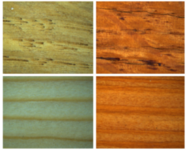
Wood, as one of the oldest building materials, is popular for different types of structures. As a natural resource with hygroscopic behavior, its strength, durability and visual appearance is highly affected by changing climate conditions. Those factors can significantly influence the durability and estimated age of climate exposed buildings and structures. Reversing or stopping degradation of the structures and their mechanical properties is of utmost importance when members or other parts...Wood, as one of the oldest building materials, is popular for different types of structures. As a natural resource with hygroscopic behavior, its strength, durability and visual appearance is highly affected by changing climate conditions. Those factors can significantly influence the durability and estimated age of climate exposed buildings and structures. Reversing or stopping degradation of the structures and their mechanical properties is of utmost importance when members or other parts of the structures need to carry loads or serve for overall structural stability. To gain a better understanding of the environmental, aging and degradation impact on climate exposed timber structures a field study on the influence of natural aging and degradation of wood species has been started to serve for determination of prerequisites for strengthening or refurbishing of treated or matured wood in reconstruction. First, a better understanding of the influence of natural hazards like climate and weather exposition or fungi attack on exposed wooden parts in historical buildings is needed to evaluate the degradation level depending on the intensity over time. With this knowledge, a repair technique based on a resistance-enhancing surface treatment shall be developed with an adhesive strengthening system based on permanent coating.
Objectives
Evaluation of the bonding strength between resin-based reinforcement systems and matured wood with significant decay, degradation or pre-treatment,
Evaluation of the degradation level by previous exposure to weathering/shading as well as the microbiological attack,
Artificial aging of wood to specify the influence of the aging process for relevant data collection and pre-requisite of a numerical ageing model.
Methods
Classification of the most influencing natural hazards on exposed wooden structures and buildings,
Investigations on how to measure the impact to the global degradation of wood,
Simulation of environmental impacts and lifecycle stages by artificially accelerated aging,
Accelerated aging lab tests on clear and small size specimen samples,
Investigations on lifetime degradation level of affected material characteristics,
Investigations and development of a permanent coating and protection system for wooden heritage buildings.» weiterlesen» einklappen
Veröffentlichungen

- Bender, Tom; Müller, Maximilian Leonard; Pinger, Christian et al.
- From decay to durability: A study on the environmental and aging impact on the degradation of wood species.
Projektteam

- Kay-Uwe Schober
- Professor
(Fachbereich Technik)

- Christian Pinger
- Mitarbeiter/in
(Fachbereich Technik)

- Maximilian Leonhard Müller
- Mitarbeiter/in
(Hochschule Mainz)

- Tom Bender
- Mitarbeiter/in
(iS-mainz - Institute of Innovative Structures)